

Diving with Spinner Dolphins at Shaab El Erg

Dolphin House El Gouna
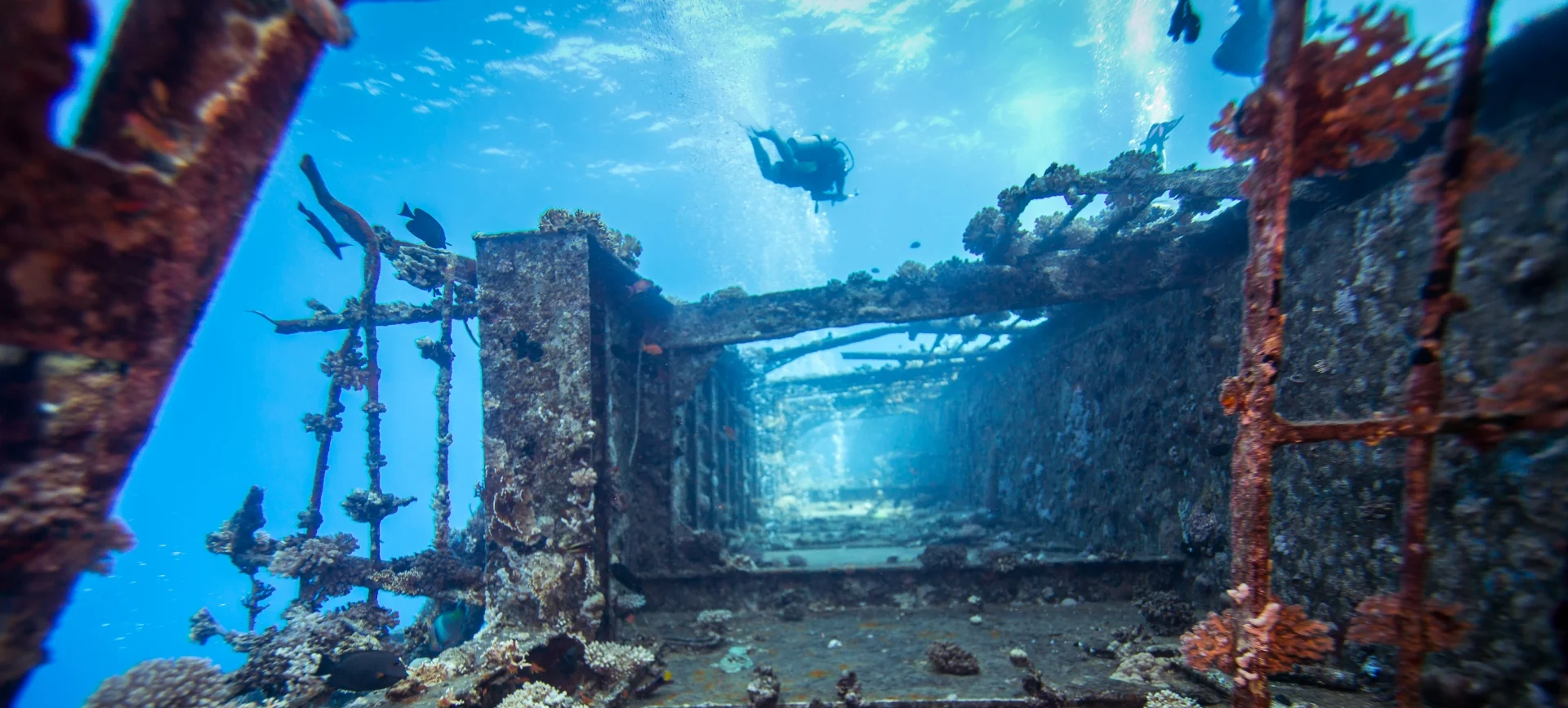
El Gouna has wrecks. El Gouna has reefs. And El Gouna has Shaab El Erg — a reef plateau about 20 kilometres northeast of town where a group of spinner dolphins has made its home, and where sightings are about as reliable as anywhere in the Red Sea. The diving community calls it the Dolphin House El Gouna, even though that name appears on no official map.
We run regular trips there from our bases at Sheraton Miramar and Mövenpick El Gouna. Every trip is different.
What Shaab El Erg Actually Is
The reef sits roughly 20 kilometres northeast of El Gouna — a broad, shallow plateau that extends for several hundred metres. It's not a deep dive: 5 to 25 metres depending on where you position yourself. But it offers exactly what spinner dolphins need: shelter, calm, and space. They come here during the day to rest and play. At night they head out to hunt.
The boat ride from El Gouna takes 45 to 60 minutes depending on sea conditions. In flat water it's a pleasant crossing. In swell it's still worth it.
The Dolphins
The residents at Shaab El Erg are almost exclusively spinner dolphins — named for their habit of launching themselves out of the water and spinning on their own axis before splashing back down. Groups of 50 to over 200 animals are common. They're curious, playful, and sometimes shy — depending on how rested they happen to be.
Occasional bottlenose dolphin sightings happen too. Rare, but it's not unheard of.
What surprises most first-time visitors: spinner dolphins spend the daytime in a kind of half-sleep. They swim slowly, dive synchronously, and rest near the surface. Someone who splashes in noisily or chases after them will scatter the group within minutes. Someone who slides in quietly and holds still will often find the dolphins coming to investigate on their own terms.
Shaab El Erg or Samadai — Which Dolphin House Is Better?
We get this question regularly. Honest answer: both are exceptional, but they work differently.
Samadai near Marsa Alam is a protected national park. Strict zones, limited numbers in the water at any time, clear rules. The protection is the strongest it gets — and you can feel it in the animals. They're calmer, less bothered by boats.
Shaab El Erg has no national park designation. Less regulation, which means the experience depends heavily on the operator. With a responsible dive centre it's equally unforgettable.
| Shaab El Erg | Samadai | |
|---|---|---|
| Protected status | — | National Park |
| Dolphin species | Spinner dolphins | Spinner dolphins |
| Depth | 5-25m | 3-15m |
| Boat ride | 45-60 min | 40 min |
| Reef quality | Very good | Good |
| For beginners | ✅ | ✅ |
Diving at Shaab El Erg
The reef itself is worth the trip even without dolphins. Along the outer edge, eagle rays glide in formation. In the deeper sections — from around 18 metres — hammerheads appear seasonally, most reliably from October to April. The coral is healthy, visibility typically ranges between 15 and 30 metres.
Divers with an Open Water certification are perfectly comfortable in the shallower sections. For the deeper reef wall, the Advanced Open Water course opens up considerably more of the site.
Snorkelling at Shaab El Erg
Honestly: some of the closest dolphin encounters happen while snorkelling rather than diving. Spinner dolphins often rest at 5 to 8 metres. A calm snorkeller floating at the surface, not pursuing, not kicking — sometimes gets closer contact than a diver producing bubbles.
Snorkelling is available on every trip and needs no certification whatsoever.
When the Trip Is Worth the Most
The dolphins are present year-round. But early boats get more from them. Our trips from El Gouna leave before 8am for exactly this reason — at that hour the reef is still quiet, the dolphins are rested, and encounters tend to run longer and closer.
In summer (June to September) the water is warmer but swell is occasionally stronger on the crossing. The rest of the year tends to offer better visibility and calmer conditions. For a full seasonal breakdown, our Best Time to Dive Egypt guide covers everything month by month.
Rules That Are Not Negotiable
We've been running trips to Shaab El Erg for years — and we've seen what happens when groups chase or touch the dolphins. The animals disappear. Sometimes for hours. Sometimes longer.
So on every trip we run, the rules are the same:
Don't pursue the dolphins. Don't touch them. Don't position yourself between a dolphin and the surface — they need to breathe. No drones above the group. Stay calm in the water and let the animals decide whether they want contact.
That sounds restrictive. In practice, it's exactly this behaviour that produces the best encounters.
What Else Is at Shaab El Erg
Beyond the dolphins, the reef rewards a proper look. Moray eels occupy the coral heads. Dense schools of glassfish hang in the shallower overhangs. The reef wall at depth has table corals, fans, and regular eagle ray passes. On good days, the sheer density of fish life along the plateau rivals anything else El Gouna has to offer.
For a full picture of diving around El Gouna, our El Gouna dive guide covers every site — including the Abu Nuhas wrecks and Carless Reef for those who want to make a week of it.
Frequently Asked Questions
Do you actually see dolphins?
Very often, yes. There's no guarantee — they're wild animals. But Shaab El Erg is one of the most consistent dolphin sites in the Red Sea, and the vast majority of our trips there result in sightings.
Can I combine Shaab El Erg with the Abu Nuhas wrecks?
Not easily — the sites sit in different directions from El Gouna. A full-day combination is possible but long. Most guests choose one per day and do the other the following morning.
I'm not certified — can I still come?
For snorkelling: absolutely. For diving: the Open Water course in El Gouna takes three to four days and unlocks the full site.
Is this the same as Dolphin House in Marsa Alam?
Different site, same species. Samadai near Marsa Alam is a national park with stricter access — read the full comparison in our Dolphin House Marsa Alam guide.
Book a Dolphin Trip with Scuba World Divers El Gouna
Trips to Shaab El Erg run from both our El Gouna bases — Sheraton Miramar and Mövenpick El Gouna. Book online and save 10%. Current pricing and departure times are in our El Gouna dive guide or ask us directly at the base.
Also diving at our other locations: Makadi Bay, Marsa Alam, Soma Bay and Sahl Hasheesh.